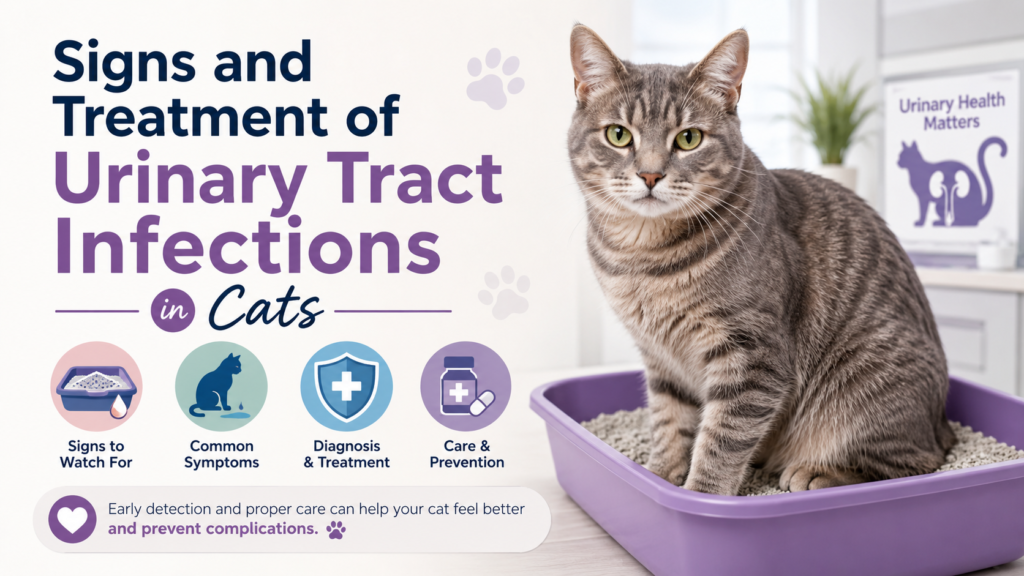
A cat that suddenly starts peeing outside the litter box is not being stubborn. In many cases, it is one of the earliest warning signs of a cat urinary tract infection or another painful urinary condition. Cats hide discomfort extremely well, which is why urinary problems often go unnoticed until the symptoms become serious.
Some cats strain to urinate. Others cry in the litter box, pass blood in their urine, or keep making trips to the box with very little urine coming out. Male cats are at even greater risk because urinary blockage can quickly become life-threatening.
The good news is that most urinary tract problems in cats respond well to early treatment. The key is knowing what to look for, understanding what causes these issues, and getting veterinary care before complications develop.
What Is a Cat Urinary Tract Infection?
A cat urinary tract infection happens when bacteria enter the urinary system and trigger inflammation. This can affect the bladder, urethra, or other parts of the urinary tract.
Many cat owners use the term UTI in cats to describe any urinary issue, but veterinarians separate true bacterial infections from broader urinary diseases.
According to the American Veterinary Medical Association, many cats diagnosed with urinary symptoms actually have feline lower urinary tract disease, commonly called FLUTD. This condition includes:
- Bladder inflammation
- Urinary crystals or stones
- Urethral blockage
- Stress-related urinary disease
- Bacterial infections
A true feline urinary tract infection is more common in:
- Senior cats
- Cats with diabetes
- Cats with kidney disease
- Overweight indoor cats
- Cats with weakened immune systems
Dr. Tony Buffington, veterinary researcher and professor emeritus at The Ohio State University College of Veterinary Medicine, has spent years studying feline urinary disorders. His research found that environmental stress plays a major role in many urinary problems in cats, especially FLUTD.
What Are the Signs of Urinary Tract Infection in Cats?
The signs of urinary tract infection in cats are often easy to miss in the beginning. Many symptoms look behavioral at first, but they are usually connected to pain or irritation in the bladder.
Common Cat UTI Symptoms
Watch for these warning signs:
- Frequent urination in cats
- Straining while urinating
- Crying or vocalizing during urination
- Blood in cat urine
- Strong-smelling urine
- Licking the genital area excessively
- Cat peeing outside the litter box
- Small amounts of urine are passed repeatedly
- Restlessness or hiding
- Loss of appetite
One of the most important symptoms of bladder infection in cats is repeated litter box visits with little or no urine produced.
Why Is a Male Cat Urinary Blockage an Emergency?
Male cats have narrower urethras than females. Even a small blockage caused by mucus, inflammation, or cat urinary crystals can stop urine flow completely.
A blocked cat may:
- Strain continuously
- Produce no urine
- Vomit
- Become weak or collapse
- Cry in pain
- Hide suddenly
Without emergency treatment, toxins build up quickly in the bloodstream. According to Cornell Feline Health Center, urinary blockage can become fatal within 24 to 48 hours.
If your cat cannot urinate, this is not a wait-and-see situation.
What Causes Urinary Tract Infections in Cats?
Several medical and lifestyle factors increase the risk of urinary problems.
Common Causes of Urinary Tract Infections in Cats
Bacterial Infections
Bacteria entering the bladder can lead to inflammation and infection.
Dehydration
Cats naturally drink less water than many animals. Concentrated urine irritates the bladder and encourages crystal formation.
Stress
Stress changes hormone levels and bladder function in cats. Multi-cat households, sudden changes in routine, loud noises, and boredom can all contribute.
Cat Urinary Crystals
Crystals form when minerals collect in concentrated urine. These crystals irritate the bladder and may block the urethra.
Certain diets and low water intake increase the risk. Choosing moisture-rich pet food can support better hydration and urinary health.
Obesity
Overweight cats often exercise less, drink less water, and experience higher inflammation levels.
Age-Related Disease
Senior cat urinary problems are commonly linked to kidney disease, diabetes, or arthritis.
How Do Veterinarians Diagnose a Cat’s Bladder Infection?
A veterinarian usually starts with:
- Physical examination
- Urinalysis
- Urine culture
- Blood tests
- X-rays or ultrasound if stones are suspected
A urine culture is especially important because not all urinary symptoms come from infection.
Dr. Cailin Heinze, board-certified veterinary nutritionist at Tufts University, explains that treating urinary symptoms without identifying the exact cause can delay recovery and worsen bladder disease.
What is the Best Urinary Tract Infection in cats?
Urinary tract infection in cats treatment depends on the underlying cause.
Antibiotics for Cat UTI
If testing confirms bacterial infection, veterinarians prescribe antibiotics based on the bacteria identified in the urine culture.
Common treatment periods range from 7 to 14 days.
Owners should never stop antibiotics early, even if symptoms improve.
Pain Relief and Anti-Inflammatory Medication
Pain control is extremely important because bladder inflammation can be severe.
Cats with painful urination in cats often improve faster when discomfort is treated properly.
Prescription Urinary Diets
Many cats with FLUTD benefit from specially formulated diets designed to:
- Reduce crystal formation
- Dilute urine
- Support bladder health
- Increase water intake
Some veterinary urinary diets also help dissolve certain types of crystals.
Fluid Therapy
Cats with dehydration or urinary blockage may need intravenous fluids.
Surgery or Catheterization
Male cats with blockage often require emergency catheter placement. Severe or repeated blockages sometimes require surgery.
How to Treat UTI in Cats at Home
Home care matters, but it should never replace veterinary diagnosis.
Home Care for Cats With UTI
Increase Water Intake
Hydration is one of the biggest protective factors for cat urinary health.
Ways to encourage drinking include:
- Water fountains
- Multiple water bowls
- Wet food diets
- Adding water to canned food
Keep the Litter Box Clean
Cats avoid dirty litter boxes. Holding urine longer can worsen bladder irritation.
Veterinary behavior experts recommend one litter box per cat plus one extra.
Reduce Stress
Stress-related urinary disease is common.
Helpful changes include:
- Predictable feeding schedules
- Quiet resting areas
- Interactive play sessions
- Separate resources in multi-cat homes
Recent discussions at the Veterinary Conferences 2026 have continued highlighting the connection between chronic stress and feline urinary disease recurrence.
Monitor Urination Closely
Track:
- Frequency of urination
- Urine amount
- Blood presence
- Appetite changes
- Energy levels
When Should You See a Vet for a Cat UTI?
Many urinary problems worsen quickly.
When to See a Vet for a Cat UTI
Contact a veterinarian immediately if your cat:
- Cannot urinate
- Has blood in urine
- Cries during urination
- Stops eating
- Vomits
- Becomes lethargic
- Frequently visits the litter box
- Suddenly urinates outside the box
Even mild symptoms should not be ignored for more than 24 hours.
Can You Prevent Urinary Tract Infections in Cats?
Preventing urinary tract infections in cats often comes down to hydration, diet, and stress management.
Practical Prevention Tips
- Feed moisture-rich diets when possible
- Encourage regular water intake
- Maintain a healthy body weight
- Reduce household stress
- Schedule regular veterinary checkups
- Scoop litter boxes daily
- Monitor changes in bathroom habits
A 2023 review published in the Journal of Feline Medicine and Surgery found that environmental enrichment and increased hydration significantly reduced recurrence rates in cats with lower urinary tract disease.
Frequently Asked Questions About Cat Urinary Problems
Can a cat UTI go away on its own?
Some mild bladder inflammation may improve temporarily, but bacterial infections and urinary blockages require veterinary treatment. Delaying care increases complication risk.
Is blood in a cat urine always a UTI?
No. Blood in cat urine may also be caused by bladder stones, FLUTD, stress-related cystitis, trauma, or urinary crystals.
Are urinary problems more common in indoor cats?
Yes. Indoor cats often have lower activity levels, higher obesity rates, and increased stress exposure, all of which can contribute to urinary disease.
How long does cat UTI treatment take?
Simple bacterial infections often improve within several days after antibiotics begin, but full treatment commonly lasts one to two weeks.
Can dry food cause urinary problems in cats?
Dry food alone does not directly cause disease, but low moisture intake can contribute to concentrated urine and crystal formation in some cats.
Final Thoughts
Most cats do not suddenly develop severe urinary disease overnight. The signs usually start small. A few extra litter box trips. A small urine spot outside the box. A cat is hiding more than usual.
Those early changes matter. Veterinarians regularly see cases where fast treatment prevented a painful blockage or serious infection from becoming life-threatening. Paying attention to urinary habits, improving hydration, and reducing stress can make a major difference in long-term feline urinary health.
For many cats, the litter box tells the story long before the disease becomes obvious.
Sources
- Vet And Tech (VAT)
- American Veterinary Medical Association (AVMA)
- Cornell Feline Health Center
- Journal of Feline Medicine and Surgery
- The Ohio State University College of Veterinary Medicine